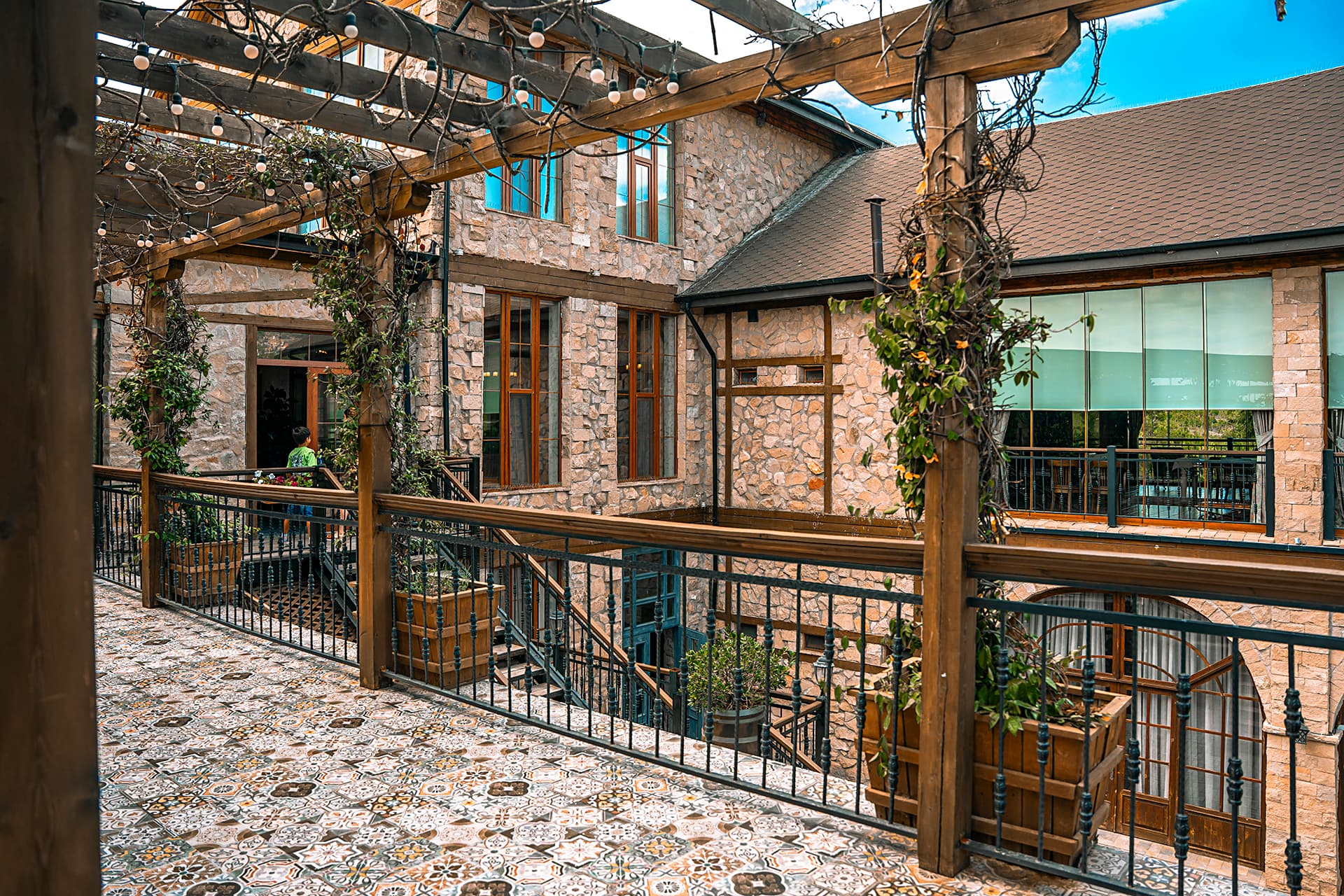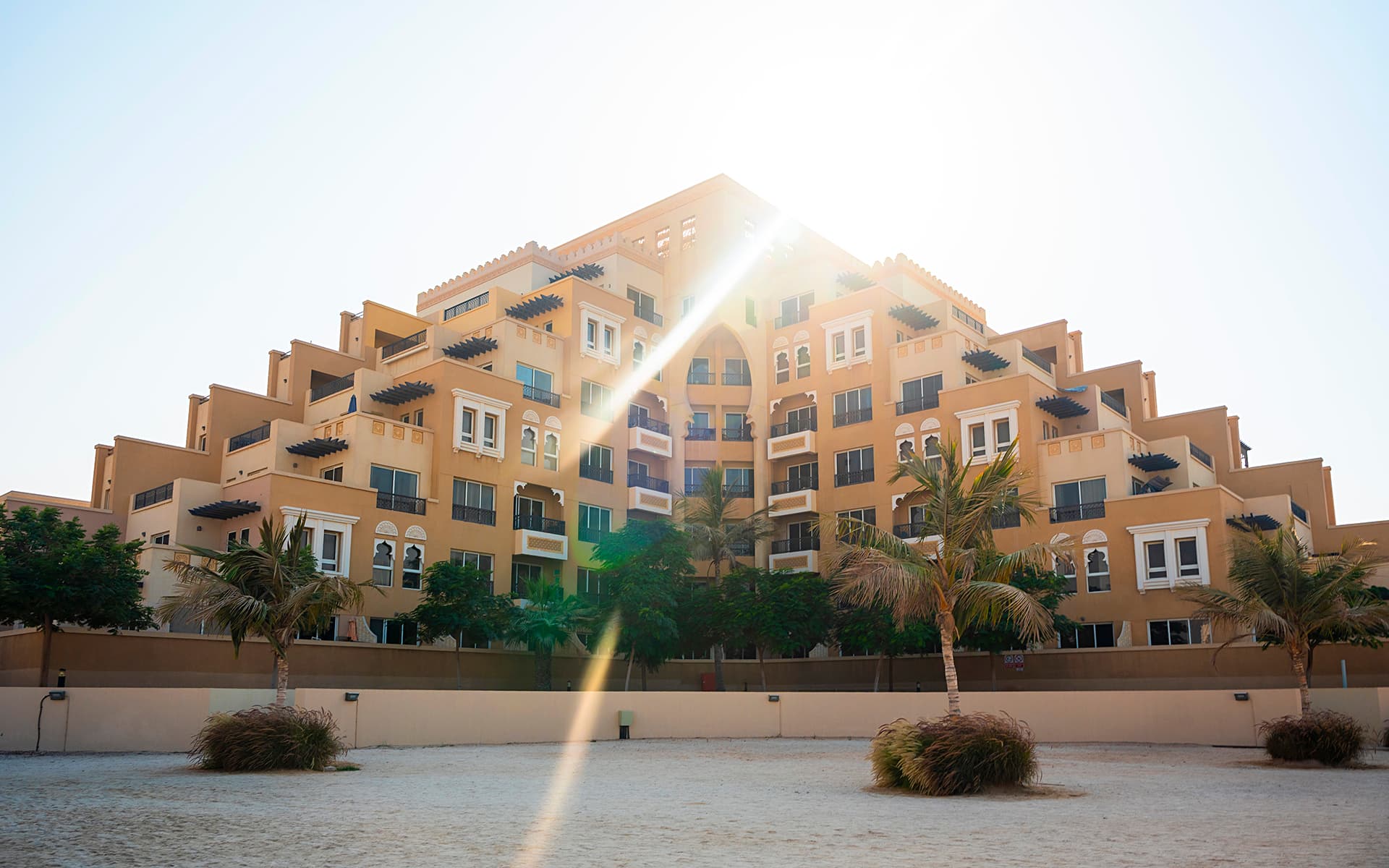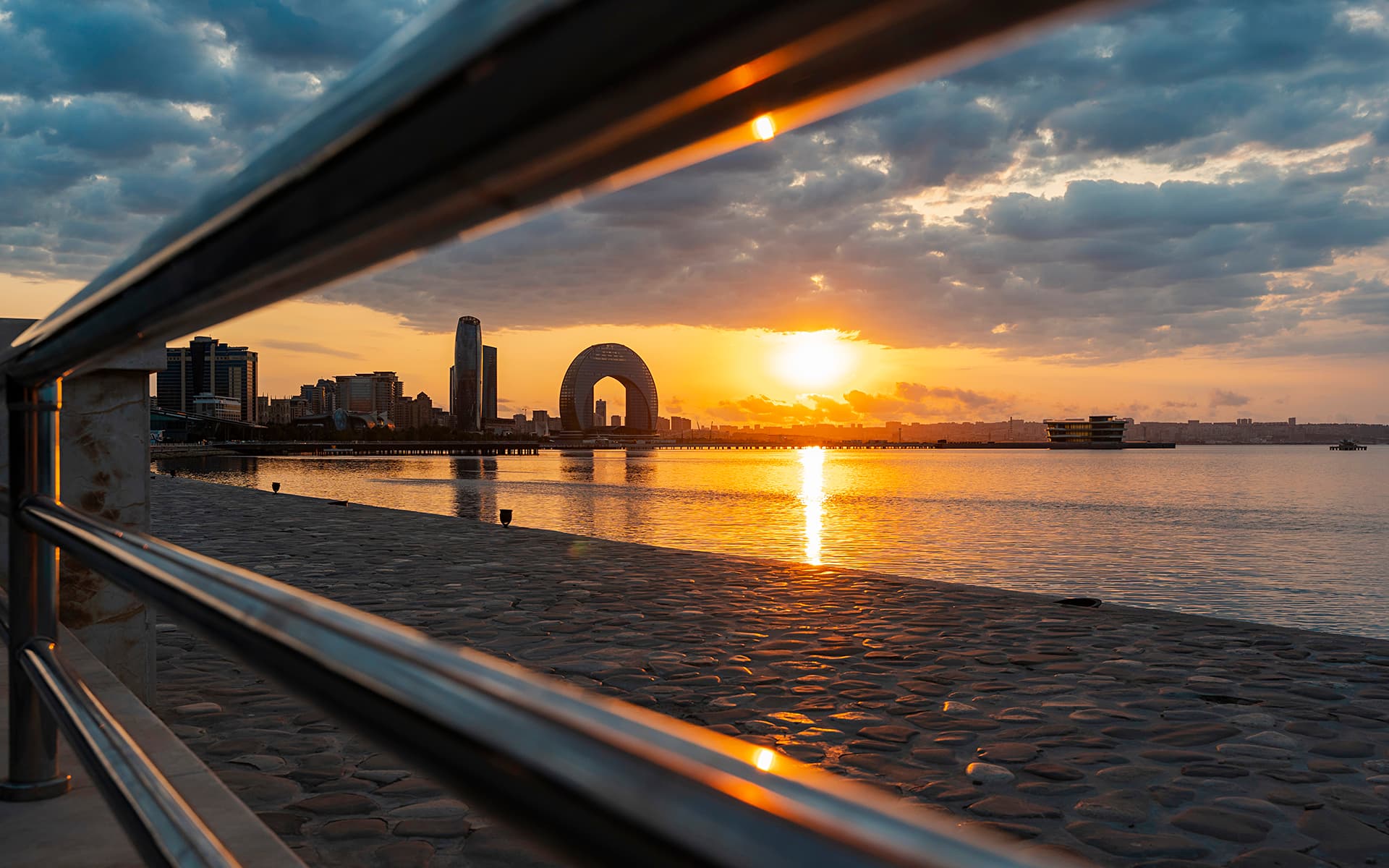
Every location has its own quality of light, shaped by latitude, climate, atmosphere, and landscape. Dubai's light is unlike anywhere else I have worked. Brilliant, intense, and unforgiving for much of the day, it presents unique challenges and opportunities for architectural photography. After years of working in this environment, I have developed a deep relationship with its particular character.
The Intensity of Desert Sun
Dubai sits at 25 degrees north latitude, in the heart of the Arabian Desert. The sun here is powerful and direct, especially during summer months when it passes nearly overhead. This creates extremely high contrast, deep shadows, and bright highlights that can easily exceed the dynamic range of camera sensors.
For interior photography, this intense sun creates challenges when it enters through windows. A room that feels comfortably bright to the human eye can have areas that are ten or twelve stops apart in exposure value. Windows blow out to pure white while interior corners disappear into black. Managing this extreme range requires careful technique, often multiple exposures blended to preserve detail across the full tonal range.
But this intensity also creates opportunity. When controlled and diffused, Dubai sunlight has a quality of luminous brilliance that adds drama and presence to architectural spaces. The key is working with it rather than fighting against it.
The Golden Hour in the Desert
The hour after sunrise and the hour before sunset, traditionally called the golden hour by photographers, takes on special significance in Dubai. The light transforms from harsh and challenging to warm and dimensional. Shadows lengthen and soften. The quality becomes gentler while retaining that characteristic desert brilliance.
Many of my most successful images are captured during these brief windows. A penthouse with western exposure at sunset. A villa exterior as morning light reveals texture in stone walls. A hotel lobby where late afternoon sun creates geometric patterns across polished marble floors. These moments require planning and patience, but the resulting images carry a quality that cannot be achieved at other times.
The challenge is that these golden hours in Dubai are not just golden but quite brief. The sun rises and sets quickly near the equator, without the extended twilight of higher latitudes. This compressed timeframe means working efficiently, knowing exactly what shots are needed, and being fully prepared when the moment arrives.
Working with Extreme Conditions
Summer in Dubai brings not just heat but a particular quality of light that affects color and atmosphere. The air can carry fine dust from the desert, creating a subtle haze that diffuses light and shifts color temperature. This is not always visible to the eye but the camera sees it clearly, and it requires adjustment in post-production to maintain color accuracy.
I have learned to embrace some of this atmospheric quality rather than correcting it entirely away. A subtle warmth, a slight softness to distant views, these characteristics are part of the authentic experience of Dubai's climate and light. Completely removing them can make images feel generic, disconnected from their specific place.
Equipment management in this environment also requires attention. Heat affects cameras, lenses, and especially lighting equipment. Batteries drain faster. Sensors can be stressed by extreme temperature swings between air-conditioned interiors and outdoor heat. Long shoots require planning for these technical realities.
The Unique Color Palette
Desert light creates a color palette distinct from other locations. The warm tones of sand and stone in the landscape influence the ambient light. The intense blue of the sky at midday creates strong color contrast. Sunset light in Dubai shifts toward amber and rose tones that are particularly saturated and dramatic.
These color characteristics have influenced how I process images shot here. I have developed a subtle approach that preserves the warmth and vibrancy characteristic of Dubai light while maintaining natural-looking skin tones and material colors. It is a delicate balance, one that has evolved through hundreds of projects and thousands of images shot in these conditions.
Understanding and working with local light is part of what makes location-specific architectural photography valuable. An image shot in Dubai should feel distinctly of this place, not like it could have been captured anywhere. The light is part of the story, part of what makes these spaces exist as they do in this particular location.
After years of working in Dubai, I have come to see its challenging light as a gift rather than an obstacle. It has taught me patience, precision, and the ability to see possibilities in difficult conditions. The brilliant intensity that initially seemed like a technical problem has become a signature element of the work. Every location teaches you something if you pay attention long enough. Dubai has taught me to work with power and intensity, to find subtlety within extremes, and to respect the profound influence of light on how we perceive and experience architectural spaces.